Students in Masinde Muliro University of Science and Technology’s (MMUST) Bachelor of Science in Biosafety & Biosecurity program continue to gain valuable hands-on experience through their field and co-op placements.
As part of his industrial attachment with the Kenya Institute of Primate Research, MMUST student Elvis Ounyo Mambo recently joined the Tana River Ecosystem Conservation and One Health Program (TRECOP) for a week-long field exercise in Tana River County, Kenya. The multidisciplinary program applies a One Health approach to better understand how interactions among people, livestock, wildlife and the environment influence the transmission of infectious diseases. Working across five communities, Elvis participated in household surveys and the collection of human, livestock, wildlife and environmental samples. His activities included collecting soil and water samples, wildlife fecal sampling involving Tana River mangabeys, red colobus monkeys and baboons, GPS documentation, sample handling and preservation, and supporting field safety planning.
The experience also provided an opportunity to apply his biosafety and biosecurity training to real-world challenges. Elvis observed firsthand the risks created where human, animal and environmental health intersect, including shared water sources, limited sanitation infrastructure and close contact between communities, livestock and wildlife. He also identified opportunities to strengthen field safety procedures, personal protective equipment and community awareness of zoonotic disease risks.
Reflecting on the experience, Elvis noted that the fieldwork transformed classroom concepts about the human-animal-environment interface into tangible realities and strengthened both his technical skills and his ability to work in unpredictable, resource-limited settings.
The IFBA and MMUST are grateful for the funding support provided by the Weapons Threat Reduction Program of Global Affairs Canada, which is helping students build the practical skills and experience needed to become the next generation of biosafety and biosecurity professionals.
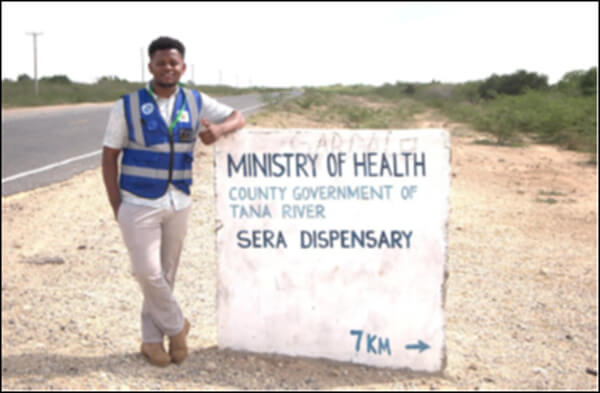
At the Sera Dispensary signpost on arrival in Sera village.
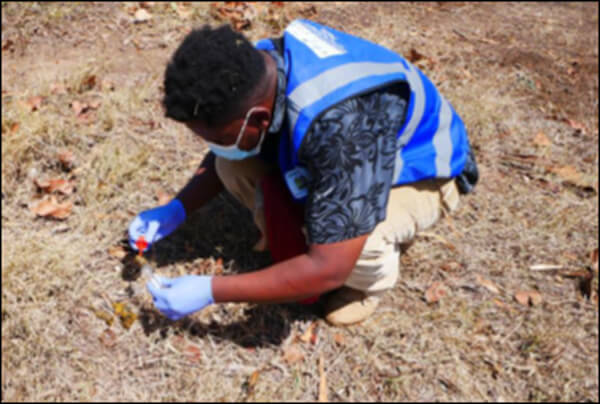
Collecting a baboon fecal sample using gloves and a specimen vial.
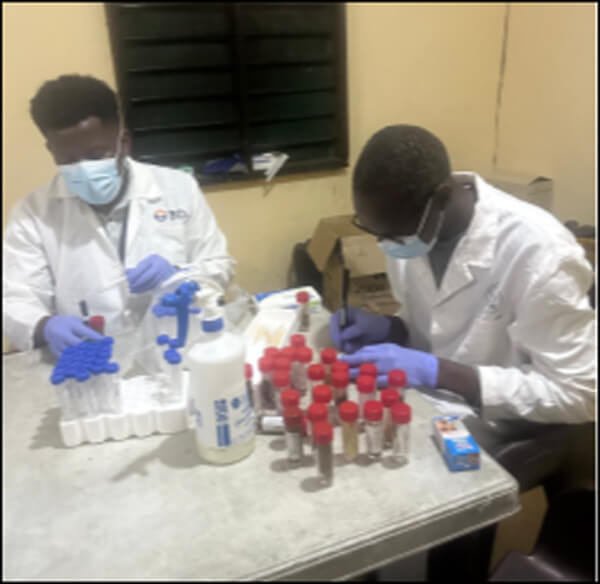
Sorting and logging preserved samples at the field station after a day of data collection.